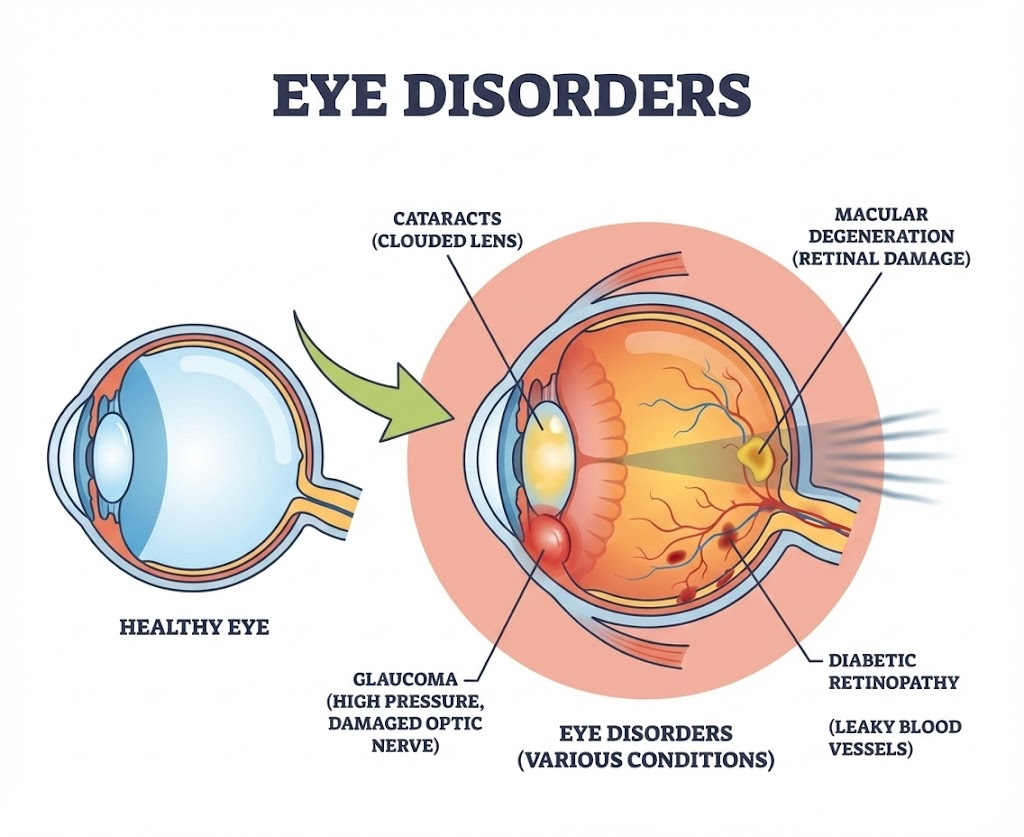

Question 1
Which of the following is the primary mechanism of action of prostaglandin analogs, such as latanoprost, in the treatment of open-angle glaucoma?
A) Decrease in aqueous humor production
B) Increase in aqueous humor outflow through the uveoscleral pathway
C) Inhibition of ciliary muscle contraction
D) Reduction of intraocular pressure by vasoconstriction
E) Increase in aqueous humor production
Click here to see the answer
Correct Answer: B) Increase in aqueous humor outflow through the uveoscleral pathway
Explanation: Prostaglandin analogs, like latanoprost, reduce intraocular pressure by increasing the outflow of aqueous humor through the uveoscleral pathway.
Question 2
A pharmacist is counseling a patient on the proper technique for instilling eye drops. Which of the following steps is not recommended in the process?
A) Wash your hands thoroughly before applying the drops
B) Tilt your head back and look upward
C) Place the drop directly on the pupil
D) Press your finger on the inner corner of the eye after instillation
E) Wait at least 5 minutes before instilling a second drop if using multiple medications
Click here to see the answer
Correct Answer: C) Place the drop directly on the pupil
Explanation: Eye drops should be instilled in the lower conjunctival sac (the space between the eye and the lower eyelid), not directly on the pupil. This avoids irritation and ensures proper absorption.
Question 3
Which of the following is a key reason for instructing patients to press on the tear duct (inner corner of the eye) after applying eye drops?
A) To enhance the absorption of the medication into the cornea
B) To prevent systemic absorption of the medication
C) To ensure even distribution of the medication across the eye
D) To reduce the number of drops needed per dose
E) To increase tear production and reduce dry eye
Click here to see the answer
Correct Answer: B) To prevent systemic absorption of the medication
Explanation: Pressing on the tear duct (punctal occlusion) after applying eye drops helps prevent the medication from draining into the nasolacrimal duct and being absorbed systemically, thereby reducing potential systemic side effects.
Question 4
A patient is instructed to wait 5 minutes between applying two different eye drops. What is the main purpose of waiting between instillations?
A) To prevent drug interactions in the eye
B) To allow each drop to be absorbed properly
C) To reduce the risk of eye infections
D) To enhance tear production between drops
E) To allow the medication to be evenly distributed over the eye
Click here to see the answer
Correct Answer: B) To allow each drop to be absorbed properly
Explanation: Waiting 5 minutes between different eye drops allows each medication to be absorbed properly without diluting or washing away the previous drop, ensuring optimal therapeutic efficacy.
Question 5
When instilling eye drops, a patient is instructed to pull down the lower eyelid to create a small pocket. Why is this step important?
A) It prevents the medication from leaking out of the eye
B) It ensures that the drop lands in the correct part of the eye
C) It reduces the risk of contamination
D) It increases tear production
E) It prevents eye irritation from the drop
Click here to see the answer
Correct Answer: B) It ensures that the drop lands in the correct part of the eye
Explanation: Pulling down the lower eyelid creates a pocket (the lower conjunctival sac) where the eye drop can be placed. This ensures that the medication is properly absorbed and reduces the chance of the drop running out of the eye.
Question 6
What should a patient do if they accidentally miss the eye when attempting to apply an eye drop?
A) Wait 10 minutes and try again
B) Wipe off the drop and instill a second drop immediately
C) Instill an extra drop to make up for the missed dose
D) Instill another drop in the correct location without delay
E) Call their healthcare provider for instructions
Click here to see the answer
Correct Answer: D) Instill another drop in the correct location without delay
Explanation: If the eye drop misses the eye, the patient should immediately instill another drop correctly. There is no need to wait or call their healthcare provider for this common mistake.
Question 7
Which of the following is a common ocular side effect of prostaglandin analogs?
A) Retinal detachment
B) Permanent brown pigmentation of the iris
C) Ptosis
D) Conjunctivitis
E) Retinal hemorrhage
Click here to see the answer
Correct Answer: B) Permanent brown pigmentation of the iris
Explanation: One of the most common ocular side effects of prostaglandin analogs is permanent brown pigmentation of the iris, especially in individuals with mixed-color irises.
Question 8
How should prostaglandin analog eye drops, such as latanoprost, be stored before and after opening?
A) Before opening: room temperature; After opening: refrigerated
B) Before opening: refrigerated; After opening: room temperature for up to 6 weeks
C) Before and after opening: room temperature
D) Before and after opening: refrigerated
E) Before opening: room temperature; After opening: discard after 1 week
Click here to see the answer
Correct Answer: B) Before opening: refrigerated; After opening: room temperature for up to 6 weeks
Explanation: Prostaglandin analogs should be stored in the refrigerator prior to opening and can be kept at room temperature for up to 6 weeks after opening.
Question 9
A 40-year-old patient is undergoing an eye examination, and the doctor administers phenylephrine eye drops to dilate the pupils. Which of the following side effects should the patient be warned about after the administration of these mydriatic drops?
A) Difficulty focusing on near objects
B) Decreased light sensitivity
C) Increased risk of hypotension
D) Increased intraocular pressure
E) Tearing of the eyes
Click here to see the answer
Correct Answer: D) Increased intraocular pressure
Explanation: Phenylephrine, a mydriatic, can cause pupil dilation and an increase in intraocular pressure, particularly in patients with glaucoma. Patients should be monitored for signs of increased IOP.
Question 10
A 35-year-old man is prescribed cyclopentolate for iritis. What is the primary therapeutic action of this cycloplegic drug?
A) Decreases intraocular pressure
B) Reduces pupil size
C) Paralyzes the ciliary muscle
D) Stimulates tear production
E) Increases accommodation
Click here to see the answer
Correct Answer: C) Paralyzes the ciliary muscle
Explanation: Cyclopentolate is a cycloplegic that blocks muscarinic receptors, leading to paralysis of the ciliary muscle, which relieves pain and prevents accommodation during inflammatory conditions such as iritis.
Question 11
During an eye examination, atropine is used to induce cycloplegia. What should the patient be informed about regarding the side effects of this drug?
A) Enhanced near vision
B) Light sensitivity and blurred vision
C) Pupil constriction
D) Increased tear production
E) Temporary improvement in refractive error
Click here to see the answer
Correct Answer: B) Light sensitivity and blurred vision
Explanation: Atropine, a cycloplegic agent, induces both mydriasis and cycloplegia, resulting in blurred vision and increased sensitivity to light. Patients should avoid bright light and activities requiring clear near vision, such as reading.
Question 12
A patient with glaucoma is accidentally administered phenylephrine for pupil dilation. What is the potential risk associated with this scenario?
A) Retinal detachment
B) Decreased intraocular pressure
C) Increased tear production
D) Worsening of glaucoma due to increased intraocular pressure
E) Corneal edema
Click here to see the answer
Correct Answer: D) Worsening of glaucoma due to increased intraocular pressure
Explanation: Phenylephrine can increase intraocular pressure, which poses a significant risk for patients with glaucoma as it can worsen the condition by further elevating IOP.
Question 13
Which of the following is a primary difference between mydriasis and cycloplegia?
A) Mydriasis only affects the ciliary muscle
B) Cycloplegia affects accommodation, while mydriasis affects pupil size
C) Mydriasis is used for inflammatory conditions, while cycloplegia is used only for diagnostic purposes
D) Cycloplegia occurs due to stimulation of alpha-adrenergic receptors
E) Mydriasis causes paralysis of the ciliary muscle
Click here to see the answer
Correct Answer: B) Cycloplegia affects accommodation, while mydriasis affects pupil size
Explanation: Mydriasis refers to pupil dilation, while cycloplegia involves paralysis of the ciliary muscle, affecting accommodation (the ability to focus on near objects).
Question 14
Which of the following patients should be cautious when using prostaglandin analogs due to a potential exacerbation of a pre-existing condition?
A) Patients with diabetes
B) Patients with uveitis
C) Patients with asthma
D) Patients with hypertension
E) Patients with hypothyroidism
Click here to see the answer
Correct Answer: B) Patients with uveitis
Explanation: Patients with a history of uveitis or herpes simplex keratitis should use prostaglandin analogs with caution, as they may exacerbate these conditions.
Question 15
Which of the following changes due to prostaglandin analog therapy is likely to reverse upon discontinuation?
A) Permanent brown pigmentation of the iris
B) Lengthening, thickening, and darkening of eyelashes
C) Periorbital fat loss
D) Retinal pigment epithelial detachment
E) Permanent corneal scarring
Click here to see the answer
Correct Answer: B) Lengthening, thickening, and darkening of eyelashes
Explanation: Changes in eyelash appearance, such as lengthening, thickening, and darkening, typically reverse upon discontinuation of prostaglandin analogs. However, iris pigmentation changes are likely to be permanent.
Question 16
A 60-year-old patient is diagnosed with primary open-angle glaucoma. The ophthalmologist prescribes a prostaglandin analog, latanoprost. What is the primary mechanism of action of this medication?
A) Decreases aqueous humor production by inhibiting carbonic anhydrase
B) Increases trabecular outflow of aqueous humor
C) Increases uveoscleral outflow of aqueous humor
D) Inhibits beta-adrenergic receptors to decrease aqueous humor production
E) Reduces intraocular pressure by increasing venous drainage of aqueous humor
Click here to see the answer
Correct Answer: C) Increases uveoscleral outflow of aqueous humor
Explanation: Prostaglandin analogs like latanoprost primarily reduce intraocular pressure by increasing uveoscleral outflow of aqueous humor.
Question 17
A patient with glaucoma is prescribed timolol eye drops. What is the main therapeutic action of this medication in treating glaucoma?
A) It increases aqueous humor production
B) It increases trabecular outflow of aqueous humor
C) It inhibits alpha-2 adrenergic receptors
D) It decreases aqueous humor production by blocking beta-adrenergic receptors
E) It enhances the absorption of aqueous humor through the Schlemm’s canal
Click here to see the answer
Correct Answer: D) It decreases aqueous humor production by blocking beta-adrenergic receptors
Explanation: Timolol, a beta-blocker, reduces intraocular pressure by decreasing the production of aqueous humor through inhibition of beta-adrenergic receptors in the ciliary body.
Question 18
What is the primary mechanism of action of ophthalmic decongestants like naphazoline in treating ocular congestion?
A) Inhibition of prostaglandin synthesis
B) Constriction of conjunctival blood vessels via alpha-adrenergic agonism
C) Blocking histamine receptors in the eye
D) Increasing tear production
E) Reducing aqueous humor production
Click here to see the answer
Correct Answer: B) Constriction of conjunctival blood vessels via alpha-adrenergic agonism
Explanation: Ophthalmic decongestants, such as naphazoline, work by activating alpha-adrenergic receptors, which constrict the dilated blood vessels in the conjunctiva, reducing redness.
Question 19
Which of the following is a common risk associated with prolonged use of ophthalmic decongestants?
A) Hyperkalemia
B) Rebound hyperemia
C) Hypoglycemia
D) Ocular hypertension
E) Increased tear production
Click here to see the answer
Correct Answer: B) Rebound hyperemia
Explanation: Prolonged use of ophthalmic decongestants can lead to rebound hyperemia, where the blood vessels in the eye dilate even more than before, causing increased redness once the effects of the medication wear off.
Question 20
For which of the following conditions should ophthalmic decongestants like tetrahydrozoline be avoided?
A) Dry eyes
B) Allergies
C) Fatigue
D) Narrow-angle glaucoma
E) Eye irritation from smoke
Click here to see the answer
Correct Answer: D) Narrow-angle glaucoma
Explanation: Ophthalmic decongestants are contraindicated in patients with narrow-angle glaucoma, as the vasoconstrictive effect of these medications can increase intraocular pressure, worsening the condition.
Question 21
Which of the following is a potential side effect of using ophthalmic decongestants like oxymetazoline?
A) Hypotension
B) Pupil dilation
C) Increased tear production
D) Hypokalemia
E) Bradycardia
Click here to see the answer
Correct Answer: B) Pupil dilation
Explanation: Pupil dilation (mydriasis) is a potential side effect of ophthalmic decongestants, which can also cause irritation, dryness, and burning.
Question 22
How long is it recommended for patients to use ophthalmic decongestants to avoid the risk of dependence and rebound hyperemia?
A) No more than 1 day
B) No more than 3-5 days
C) No more than 7-10 days
D) No more than 2 weeks
E) No more than 1 month
Click here to see the answer
Correct Answer: B) No more than 3-5 days
Explanation: Ophthalmic decongestants should not be used for more than 3-5 days to avoid the risk of dependence and rebound hyperemia, which can result in worsened redness and irritation.
Question 23
Which of the following conditions is most likely to cause ophthalmic congestion?
A) Hypothyroidism
B) Hypoglycemia
C) Conjunctivitis
D) Hyperlipidemia
E) Gallbladder disease
Click here to see the answer
Correct Answer: C) Conjunctivitis
Explanation: Conjunctivitis (pink eye) is a common cause of ophthalmic congestion, leading to inflammation and redness of the eyes.
Question 24
Which of the following medications used in glaucoma management has a significant side effect of causing increased pigmentation of the iris and eyelashes?
A) Pilocarpine
B) Dorzolamide
C) Latanoprost
D) Brimonidine
E) Timolol
Click here to see the answer
Correct Answer: C) Latanoprost
Explanation: Prostaglandin analogs such as latanoprost are associated with side effects like increased pigmentation of the iris, darkening of the eyelashes, and increased eyelash growth.
Question 25
A patient with a history of asthma and COPD is diagnosed with open-angle glaucoma. Which of the following medications should be avoided due to the risk of exacerbating respiratory conditions?
A) Timolol
B) Brimonidine
C) Latanoprost
D) Dorzolamide
E) Pilocarpine
Click here to see the answer
Correct Answer: A) Timolol
Explanation: Beta-blockers like timolol should be avoided in patients with asthma and COPD because they can cause bronchoconstriction and exacerbate respiratory conditions.
Question 26
Which of the following drugs used in glaucoma works by inhibiting carbonic anhydrase and reducing aqueous humor production?
A) Brimonidine
B) Timolol
C) Dorzolamide
D) Latanoprost
E) Pilocarpine
Click here to see the answer
Correct Answer: C) Dorzolamide
Explanation: Dorzolamide is a carbonic anhydrase inhibitor that reduces intraocular pressure by decreasing the production of aqueous humor.
Question 27
Which of the following best describes the primary mechanism of action of carbonic anhydrase inhibitors like dorzolamide in the treatment of glaucoma?
A) Increase aqueous humor outflow through the trabecular meshwork
B) Decrease intraocular pressure by inhibiting carbonic anhydrase and reducing aqueous humor production
C) Inhibition of prostaglandin synthesis
D) Increase in ciliary muscle contraction
E) Blockage of calcium channels in the eye
Click here to see the answer
Correct Answer: B) Decrease intraocular pressure by inhibiting carbonic anhydrase and reducing aqueous humor production
Explanation: Carbonic anhydrase inhibitors, such as dorzolamide, decrease intraocular pressure by inhibiting the carbonic anhydrase enzyme, which reduces the production of aqueous humor.
Question 28
Which of the following is a common side effect associated with the topical use of carbonic anhydrase inhibitors like dorzolamide?
A) Hypercalcemia
B) Bitter taste
C) Hypoglycemia
D) Tinnitus
E) Alopecia
Click here to see the answer
Correct Answer: B) Bitter taste
Explanation: Topical carbonic anhydrase inhibitors, such as dorzolamide, are commonly associated with a bitter taste, along with eye discomfort and blurred vision.
Question 29
Which of the following is a contraindication for the use of carbonic anhydrase inhibitors such as acetazolamide and dorzolamide?
A) History of hypertension
B) History of peptic ulcer disease
C) Sulfa allergy
D) Diabetes
E) Asthma
Click here to see the answer
Correct Answer: C) Sulfa allergy
Explanation: Carbonic anhydrase inhibitors, like acetazolamide and dorzolamide, are contraindicated in patients with sulfa allergies due to the risk of allergic reactions.
Question 30
Which of the following is a potential systemic side effect of oral carbonic anhydrase inhibitors, such as acetazolamide?
A) Hyperkalemia
B) Metabolic acidosis
C) Hypoglycemia
D) Hypercalcemia
E) Hypotension
Click here to see the answer
Correct Answer: B) Metabolic acidosis
Explanation: Oral carbonic anhydrase inhibitors, such as acetazolamide, can cause metabolic acidosis due to the inhibition of bicarbonate reabsorption in the kidneys.
Question 31
Which of the following formulations of carbonic anhydrase inhibitors is administered orally and commonly used to reduce intraocular pressure?
A) Dorzolamide
B) Brinzolamide
C) Acetazolamide
D) Timolol
E) Latanoprost
Click here to see the answer
Correct Answer: C) Acetazolamide
Explanation: Acetazolamide is an oral carbonic anhydrase inhibitor used to reduce intraocular pressure in patients with glaucoma, while dorzolamide and brinzolamide are topical formulations.
Question 32
Dorzolamide is often combined with which of the following medications to enhance its efficacy in reducing intraocular pressure in glaucoma patients?
A) Latanoprost
B) Timolol
C) Pilocarpine
D) Acetazolamide
E) Brimonidine
Click here to see the answer
Correct Answer: B) Timolol
Explanation: Dorzolamide is frequently combined with the beta-blocker timolol in a fixed-combination formulation to enhance the reduction of intraocular pressure in glaucoma patients.
Question 33
Which of the following best describes the primary mechanism of action of alpha-2 agonists like brimonidine in the treatment of glaucoma?
A) Increase trabecular meshwork outflow
B) Decrease aqueous humor production and increase uveoscleral outflow
C) Block beta receptors in the ciliary body
D) Inhibit carbonic anhydrase in the ciliary epithelium
E) Stimulate prostaglandin synthesis
Click here to see the answer
Correct Answer: B) Decrease aqueous humor production and increase uveoscleral outflow
Explanation: Alpha-2 agonists, such as brimonidine, work by decreasing aqueous humor production and increasing uveoscleral outflow, thereby lowering intraocular pressure in glaucoma patients.
Question 34
Which of the following is a contraindication for the use of alpha-2 agonists such as brimonidine?
A) Hypertension
B) Diabetes
C) MAOI use
D) Asthma
E) Hyperlipidemia
Click here to see the answer
Correct Answer: C) MAOI use
Explanation: Alpha-2 agonists, such as brimonidine, are contraindicated in patients using monoamine oxidase inhibitors (MAOIs) due to the potential for serious drug interactions.
Question 35
Which of the following is a common side effect associated with the use of alpha-2 agonists for glaucoma treatment?
A) Hyperglycemia
B) Dry mouth
C) Hyperkalemia
D) Gingival hyperplasia
E) Conjunctival hyperemia
Click here to see the answer
Correct Answer: B) Dry mouth
Explanation: Dry mouth is a common side effect of alpha-2 agonists like brimonidine, along with other systemic effects such as hypotension and local irritation.
Question 36
Which of the following is a unique consideration for the use of apraclonidine in glaucoma management?
A) It should be avoided in patients with asthma
B) It is recommended for long-term use due to its consistent efficacy
C) It may cause tachyphylaxis with long-term use
D) It is the first-line treatment for chronic open-angle glaucoma
E) It must be combined with carbonic anhydrase inhibitors
Click here to see the answer
Correct Answer: C) It may cause tachyphylaxis with long-term use
Explanation: Apraclonidine is not recommended for long-term use due to the development of tachyphylaxis, where the drug’s efficacy diminishes with continued use.
Question 37
Which of the following is the correct dosing schedule for brimonidine in the treatment of glaucoma?
A) 1 drop every 4 hours
B) 1 drop Q8H
C) 1 drop Q12H
D) 2 drops Q12H
E) 2 drops Q24H
Click here to see the answer
Correct Answer: C) 1 drop Q12H
Explanation: The typical dosing schedule for brimonidine is 1 drop every 12 hours (Q12H) for the management of glaucoma.
Question 38
Which of the following systemic side effects may occur with the use of alpha-2 agonists like apraclonidine in glaucoma treatment?
A) Bradycardia
B) Tachycardia
C) Hypercalcemia
D) Hypotension
E) Hypernatremia
Click here to see the answer
Correct Answer: D) Hypotension
Explanation: Alpha-2 agonists, such as apraclonidine, can cause systemic side effects like hypotension due to their action on alpha-2 adrenergic receptors.
Question 41
A 65-year-old patient with open-angle glaucoma is prescribed timolol eye drops. What is the primary mechanism of action of this medication in treating glaucoma?
A) Decreases aqueous humor production by inhibiting alpha-1 receptors
B) Increases trabecular outflow of aqueous humor
C) Inhibits beta2 receptors on ciliary muscle, reducing aqueous humor production
D) Enhances uveoscleral outflow of aqueous humor
E) Inhibits carbonic anhydrase, reducing aqueous humor production
Click here to see the answer
Correct Answer: C) Inhibits beta2 receptors on ciliary muscle, reducing aqueous humor production
Explanation: Timolol is a non-selective beta blocker that reduces intraocular pressure by decreasing aqueous humor production through inhibition of beta2 receptors in the ciliary body.
Question 42
A 70-year-old patient with glaucoma also has a history of COPD. Which beta-blocker is most appropriate for managing their glaucoma, considering their respiratory condition?
A) Timolol
B) Levobunolol
C) Betaxolol
D) Propranolol
E) Carteolol
Click here to see the answer
Correct Answer: C) Betaxolol
Explanation: Betaxolol is a beta1-selective blocker, making it a safer choice for patients with respiratory conditions like COPD compared to non-selective beta blockers like timolol and levobunolol.
Question 43
A patient using timolol eye drops for glaucoma complains of fatigue, bradycardia, and hypotension. What could be the cause of these symptoms?
A) Excessive aqueous humor reduction
B) Intraocular pressure spikes
C) Systemic absorption of the eye drops
D) Overuse of the medication
E) Drug interaction with beta agonists
Click here to see the answer
Correct Answer: C) Systemic absorption of the eye drops
Explanation: Beta-blocker eye drops like timolol can be systemically absorbed through the nasolacrimal duct, potentially leading to systemic side effects such as bradycardia, hypotension, and fatigue.
Question 44
A patient with glaucoma is concerned about the potential systemic effects of their prescribed beta-blocker eye drops. What advice should the pharmacist provide to help minimize systemic absorption?
A) Apply more drops to achieve faster results
B) Press the tear duct after applying eye drops to reduce systemic absorption
C) Use cold compresses before applying the drops
D) Avoid blinking for 5 minutes after administration
E) Apply the drops only before bedtime to prevent systemic absorption
Click here to see the answer
Correct Answer: B) Press the tear duct after applying eye drops to reduce systemic absorption
Explanation: Pressing the tear duct after administering eye drops (also known as punctal occlusion) helps reduce the systemic absorption of the medication, minimizing systemic side effects.
Question 45
A patient with glaucoma is currently using timolol but requires additional therapy to lower intraocular pressure. Which of the following is most likely to be prescribed in combination with timolol for enhanced intraocular pressure reduction?
A) Prostaglandin analogs
B) Beta2 agonists
C) Systemic corticosteroids
D) Calcium channel blockers
E) Oral beta-blockers
Click here to see the answer
Correct Answer: A) Prostaglandin analogs
Explanation: Beta-blockers like timolol are often combined with other anti-glaucoma agents such as prostaglandin analogs to achieve enhanced intraocular pressure reduction.
Question 46
A patient presents with red, bloodshot eyes and is seeking relief from their symptoms. They mention using an over-the-counter ophthalmic decongestant containing naphazoline for several days without much improvement. What is the most likely explanation for the persistent redness?
A) Allergic conjunctivitis
B) Dry eye syndrome
C) Rebound hyperemia
D) Glaucoma
E) Bacterial conjunctivitis
Click here to see the answer
Correct Answer: C) Rebound hyperemia
Explanation: Prolonged use of ophthalmic decongestants like naphazoline can lead to rebound hyperemia, where the blood vessels dilate even more after the effects of the drug wear off, causing increased redness.
Question 47
A 35-year-old woman has been using tetrahydrozoline eye drops to relieve redness due to eye strain from long work hours. She reports experiencing stinging and blurry vision immediately after using the drops. Which of the following is the most likely mechanism causing her symptoms?
A) Anticholinergic effects
B) Alpha-adrenergic receptor stimulation
C) Increased tear production
D) Decreased intraocular pressure
E) Inhibition of histamine release
Click here to see the answer
Correct Answer: B) Alpha-adrenergic receptor stimulation
Explanation: Tetrahydrozoline, an alpha-adrenergic agonist, constricts the blood vessels in the eye, which can lead to side effects like stinging and blurred vision.
Question 48
A patient with a history of narrow-angle glaucoma asks about using over-the-counter eye drops for redness relief. Which of the following ingredients should be avoided in this patient?
A) Sodium chloride
B) Naphazoline
C) Lubricating drops
D) Polyethylene glycol
E) Sodium hyaluronate
Click here to see the answer
Correct Answer: B) Naphazoline
Explanation: Naphazoline and other alpha-adrenergic agonists are contraindicated in patients with narrow-angle glaucoma due to the risk of increased intraocular pressure.
Question 49
A patient using phenylephrine eye drops for ocular redness reports experiencing pupil dilation and eye irritation. What is the primary concern with the use of phenylephrine in this patient?
A) Increased risk of glaucoma
B) Systemic absorption leading to hypotension
C) Rebound dry eye syndrome
D) Antihistaminic effects causing sedation
E) Decreased tear production
Click here to see the answer
Correct Answer: A) Increased risk of glaucoma
Explanation: Phenylephrine can cause pupil dilation and increased intraocular pressure, which is a significant concern for patients with narrow-angle glaucoma.
Question 50
A patient presents with eye redness and irritation after swimming in a chlorinated pool. He has been using oxymetazoline eye drops for relief but is concerned about the potential risks of prolonged use. Which of the following is the most important counseling point for this patient?
A) Use oxymetazoline only once a day
B) Discontinue the use of oxymetazoline after 5 days to avoid rebound hyperemia
C) Increase the frequency of oxymetazoline use to enhance its effectiveness
D) Combine oxymetazoline with lubricating drops to prevent side effects
E) Use oxymetazoline indefinitely for ongoing relief
Click here to see the answer
Correct Answer: B) Discontinue the use of oxymetazoline after 5 days to avoid rebound hyperemia
Explanation: Ophthalmic decongestants like oxymetazoline should not be used for more than 3-5 days due to the risk of rebound hyperemia, where the redness worsens after the drug wears off.
Question 51
Which of the following is a primary ingredient in ophthalmic lubricants used in artificial tears?
A) White petrolatum
B) Hydroxypropyl methylcellulose (HPMC)
C) Lanolin
D) Glycerin
E) Cyclopentolate
Click here to see the answer
Correct Answer: B) Hydroxypropyl methylcellulose (HPMC)
Explanation: Hydroxypropyl methylcellulose (HPMC) is a primary ingredient in many artificial tear products, where it acts as a lubricant to provide moisture to the eye and prevent dryness.
Question 52
Which of the following components in ophthalmic ointments helps prevent evaporation and assists in melting at body temperature?
A) Lanolin
B) Glycerin
C) Mineral oil
D) Polyvinyl alcohol
E) HPMC
Click here to see the answer
Correct Answer: C) Mineral oil
Explanation: Mineral oil is included in ophthalmic ointments to assist in melting at body temperature and help prevent evaporation, making it an essential component for maintaining the ointment’s lubricating effect.
Question 53
What is the primary use of ophthalmic lubricants like artificial tears and ointments?
A) Treating bacterial conjunctivitis
B) Treating minor dry eye conditions
C) Reducing intraocular pressure
D) Managing uveitis
E) Treating allergic conjunctivitis
Click here to see the answer
Correct Answer: B) Treating minor dry eye conditions
Explanation: Ophthalmic lubricants, including artificial tears and ointments, are primarily used to treat minor dry eye conditions by providing moisture and preventing dryness of the eye surface.
Question 54
Which of the following side effects is most commonly associated with the use of ophthalmic ointments?
A) Tearing
B) Eye redness
C) Blurred vision immediately after application
D) Severe pain
E) Decreased tear production
Click here to see the answer
Correct Answer: C) Blurred vision immediately after application
Explanation: Ophthalmic ointments often cause temporary blurred vision immediately after application due to their thicker consistency compared to eye drops.
Question 55
What is the primary role of white petrolatum in ophthalmic ointments?
A) Acting as an anti-inflammatory agent
B) Serving as a lubricant and ointment base
C) Inhibiting bacterial growth
D) Enhancing the absorption of active ingredients
E) Reducing eye redness
Click here to see the answer
Correct Answer: B) Serving as a lubricant and ointment base
Explanation: White petrolatum acts as a lubricant and ointment base in ophthalmic ointments, helping to provide moisture to the eye and prevent dryness.
Question 56
Which of the following ingredients in ophthalmic ointments helps in the absorption of water-soluble ingredients and inhibits evaporation?
A) Glycerin
B) Lanolin
C) HPMC
D) Polyvinyl alcohol
E) Mineral oil
Click here to see the answer
Correct Answer: B) Lanolin
Explanation: Lanolin is included in ophthalmic ointments to help in the absorption of water-soluble ingredients and to inhibit evaporation, enhancing the moisturizing effects of the ointment.
Question 57
A patient with allergic conjunctivitis is prescribed ketotifen eye drops. What is the primary mechanism of action of ketotifen in treating this condition?
A) Stabilizes mast cells to prevent histamine release
B) Blocks histamine receptors, reducing allergic symptoms
C) Increases tear production to reduce ocular dryness
D) Inhibits prostaglandin synthesis
E) Promotes vasoconstriction in conjunctival vessels
Click here to see the answer
Correct Answer: B) Blocks histamine receptors, reducing allergic symptoms
Explanation: Ketotifen is an ophthalmic antihistamine that blocks histamine receptors, providing fast relief from itching and redness caused by allergic conjunctivitis.
Question 58
A patient with allergic conjunctivitis is prescribed sodium cromoglycate. How long should the patient expect to wait before seeing the full therapeutic effect?
A) Within a few minutes
B) Within a few hours
C) Several days
D) One week
E) Several weeks
Click here to see the answer
Correct Answer: C) Several days
Explanation: Ophthalmic mast cell stabilizers like sodium cromoglycate require several days for their onset of action, as they work by preventing mast cell degranulation and subsequent histamine release.
Question 59
A patient with seasonal allergic conjunctivitis is using olopatadine eye drops twice daily. Which of the following is a common side effect of this medication?
A) Increased tear production
B) Eye irritation
C) Blurred vision
D) Drowsiness
E) Increased intraocular pressure
Click here to see the answer
Correct Answer: B) Eye irritation
Explanation: Common side effects of ophthalmic antihistamines like olopatadine include eye irritation, headache, and dryness.
Question 60
A patient using sodium cromoglycate eye drops for allergic conjunctivitis asks about the stability of the medication after opening. What is the most appropriate response?
A) The drops are stable for 6 months after opening
B) The drops are stable for only one month after opening
C) The drops do not have an expiration date after opening
D) The drops must be discarded immediately after opening
E) The drops are stable for one year after opening
Click here to see the answer
Correct Answer: B) The drops are stable for only one month after opening
Explanation: Sodium cromoglycate eye drops are generally stable for only one month after opening and should be discarded after that period to avoid contamination and reduced efficacy.
Question 61
A patient is prescribed a mast cell stabilizer for allergic conjunctivitis. Which of the following medications would most likely be prescribed?
A) Ketotifen
B) Olopatadine
C) Sodium cromoglycate
D) Azelastine
E) Loratadine
Click here to see the answer
Correct Answer: C) Sodium cromoglycate
Explanation: Sodium cromoglycate is a mast cell stabilizer commonly used to prevent allergic reactions in the eyes by stabilizing mast cells and preventing the release of histamine and other inflammatory mediators.
Question 62
Which of the following is the primary ingredient used as a base in ophthalmic ointments to provide lubrication?
A) Glycerin
B) White petrolatum
C) Hydroxypropyl methylcellulose (HPMC)
D) Polyvinyl alcohol
E) Lanolin
Click here to see the answer
Correct Answer: B) White petrolatum
Explanation: White petrolatum is commonly used as a base in ophthalmic ointments to provide lubrication and protect the eye’s surface.
Question 63
What is the role of mineral oil in the formulation of ophthalmic ointments?
A) Increases tear production
B) Assists in the melting of the ointment at body temperature
C) Reduces intraocular pressure
D) Enhances the absorption of active ingredients
E) Acts as an antimicrobial agent
Click here to see the answer
Correct Answer: B) Assists in the melting of the ointment at body temperature
Explanation: Mineral oil is used in ophthalmic ointments to help the ointment melt at body temperature, allowing it to spread easily across the eye’s surface.
Question 64
Which of the following is a common ingredient in artificial tear formulations that acts as a lubricant to relieve dry eye symptoms?
A) White petrolatum
B) Polyvinyl alcohol
C) Glycerin
D) Lanolin
E) Sodium chloride
Click here to see the answer
Correct Answer: B) Polyvinyl alcohol
Explanation: Polyvinyl alcohol is commonly used in artificial tear formulations to act as a lubricant, providing moisture and relief for dry eyes. PVA is available in various viscosity grades. Depending on the formula and the grade of PVA used, it can also be used as a viscosity enhancer.
Question 65
A 55-year-old patient with open-angle glaucoma is prescribed latanoprost. What is the recommended dose for this medication?
A) One drop in the affected eye twice daily
B) One drop in the affected eye every 4-6 hours
C) One drop in the affected eye once daily in the morning
D) One drop in the affected eye once daily in the evening
E) Two drops in the affected eye once daily in the evening
Click here to see the answer
Correct Answer: D) One drop in the affected eye once daily in the evening
Explanation: The recommended dose of latanoprost is one drop in the affected eye(s) once daily in the evening. Administering the medication in the evening maximizes the drug’s efficacy in reducing intraocular pressure (IOP).
Question 66
A patient asks why latanoprost is administered in the evening. What is the most appropriate response?
A) It is more convenient to administer eye drops at night
B) The drug’s efficacy in reducing intraocular pressure is greater at night
C) Administering at night reduces the risk of side effects
D) Latanoprost can cause blurry vision, so it is best used before sleep
E) The drug is unstable when exposed to light, so it must be used at night
Click here to see the answer
Correct Answer: B) The drug’s efficacy in reducing intraocular pressure is greater at night
Explanation: Latanoprost is more effective at reducing intraocular pressure when administered in the evening. It aligns with the drug’s pharmacokinetics and helps manage the natural diurnal fluctuation of intraocular pressure.
Question 67
If a patient misses a dose of latanoprost, what should they do?
A) Skip the missed dose and apply the next dose at the regular time
B) Apply the missed dose immediately and then continue with the regular schedule
C) Apply two doses the next time
D) Apply the missed dose as soon as remembered, even if it is close to the next dose
E) Stop using the medication and consult a healthcare provider
Click here to see the answer
Correct Answer: A) Skip the missed dose and apply the next dose at the regular time
Explanation: If a patient misses a dose of latanoprost, they should skip the missed dose and apply the next dose at the regular time. Doubling up doses is not recommended as it does not improve efficacy and may increase the risk of side effects.
Question 68
Latanoprost is prescribed to reduce intraocular pressure (IOP) in glaucoma. What is the typical response time for maximum IOP reduction after administering latanoprost?
A) 1-2 hours
B) 2-4 hours
C) 8-12 hours
D) 24-48 hours
E) 4-6 weeks
Click here to see the answer
Correct Answer: C) 8-12 hours
Explanation: Latanoprost typically reaches its maximum intraocular pressure-lowering effect within 8-12 hours after administration. The reduction in IOP lasts for 24 hours, supporting the once-daily dosing regimen.
Question 69
Which ingredient is commonly added to ophthalmic ointments to aid in the absorption of water-soluble ingredients and prevent evaporation?
A) Lanolin
B) White petrolatum
C) Glycerin
D) Mineral oil
E) Hydroxypropyl methylcellulose (HPMC)
Click here to see the answer
Correct Answer: A) Lanolin
Explanation: Lanolin is added to ophthalmic ointments to aid in the absorption of water-soluble ingredients and to prevent the evaporation of moisture from the eye’s surface.
Question 70
Which of the following is a key difference between the formulation of ophthalmic ointments and ophthalmic drops?
A) Ointments are typically water-based, while drops are oil-based
B) Ointments contain thickeners like HPMC, while drops do not
C) Ointments have a thicker consistency due to the presence of petrolatum, while drops are typically solutions or suspensions
D) Ointments are always used for anti-inflammatory purposes, while drops are not
E) Ointments are used to reduce intraocular pressure, while drops are not
Click here to see the answer
Correct Answer: C) Ointments have a thicker consistency due to the presence of petrolatum, while drops are typically solutions or suspensions
Explanation: Ophthalmic ointments have a thicker consistency due to ingredients like white petrolatum, while ophthalmic drops are typically solutions or suspensions that provide a more liquid form of treatment.
Question 71
Which of the following ingredients is typically found in both ophthalmic drops and ointments to provide lubrication and relieve dry eye symptoms?
A) Hydroxypropyl methylcellulose (HPMC)
B) Lanolin
C) Sodium chloride
D) Glycerin
E) Zinc oxide
Click here to see the answer
Correct Answer: A) Hydroxypropyl methylcellulose (HPMC)
Explanation: Hydroxypropyl methylcellulose (HPMC) is a common ingredient in both ophthalmic drops and ointments, used to provide lubrication and relieve dry eye symptoms by increasing moisture retention on the eye’s surface. It also increases the viscosity of eye drops which increases the contact time of formulation (hence, the drug) with cornea and increases the retention time of the tear.